![What's in Your Beet Juice? Nitrate and Nitrite Content of Beet Juice Products Marketed to Athletes. [Gallardo and Coggan, 2018]](https://b.thumbs.redditmedia.com/O2LXvgosBUcoP72P4df5f1ksdlJCjuP0BkAtajpIGsk.jpg "What's in Your Beet Juice? Nitrate and Nitrite Content of Beet Juice Products Marketed to Athletes. [Gallardo and Coggan, 2018]") |
submitted by /u/dreiter [link] [comments] |

What's in Your Beet Juice? Nitrate and Nitrite Content of Beet Juice Products Marketed to Athletes. [Gallardo and Coggan, 2018]

Weekly Link Love — Edition 39

Research of the Week
For women, the smell of a newborn triggers a dopamine rush in brain reward centers.
Resistance training for older adults: a position statement.
Trees keep nearby stumps alive.
Early hominids breast fed as long as six years.
If you eat a standard American diet, nuts may help your nuts.
New Primal Blueprint Podcasts

Episode 359: Daniel J. Siegel MD: Host Elle Russ chats with Dr. Daniel J. Siegel about the power of mindful awareness.

Episode 360: Dr. Tommy Wood Setting Us Straight on Carnivore, Plant-Based, Testosterone, and the Quantified Self Movement: Host Brad Kearns chats with Dr. Tommy Wood.

Primal Health Coach Radio, Episode 19: Hosts Erin and Laura chat with Michelle Pfenninghaus about the importance of treating your business like a business.
Each week, select Mark’s Daily Apple blog posts are prepared as Primal Blueprint Podcasts. Need to catch up on reading, but don’t have the time? Prefer to listen to articles while on the go? Check out the new blog post podcasts below, and subscribe to the Primal Blueprint Podcast here so you never miss an episode.
Media, Schmedia
Interesting Blog Posts
How important are social relations for health?
How one man changed his blood lipids by adding in some targeted carbohydrate (while staying ketogenic).
Success Stories
Dean Brennan’s story.
Social Notes
Everything Else
The importance of harmony.
The Saudi Crown Prince’s vision of the future (involves robot Blood Sport competitions).
Will exogenous ketones be banned at the Tour de France?
Things I’m Up to and Interested In
Podcast I recently did: Discussing building a powerful personal brand and becoming a successful entrepreneur at any age with Lewis Howes.
Blog post I enjoyed: The one discussing what we know about Neu5Gc and heart disease in humans.
Article I found relevant: How to prevent and treat heat stroke.
Tick story I found terrible: Ticks successfully kill a cow by exsanguination.
This is a powerful story: The new human story.
Question I’m Asking
How important has social connection been in your life and health?
Recipe Corner
- Kalbi, or Korean-style short ribs.
- Tripe noodles.
Time Capsule
One year ago (Jul 21 – Jul 27)
- Exercising While Keto: 11 Tips for the Transition (and Long Term) – How to improve your performance.
- Interval Training for Beginners – Tips for those starting out.
Comment of the Week
“You know, I feel like I’ve heard a lot of sneering about dynamic tension. It’s nice to know those comic book ads from the 70s were right.”
– I attribute a lot of my success in life to the pair of X-ray specs I bought out the back of a Spiderman comic, Ion Freeman (itself a great comic book name).

The post Weekly Link Love — Edition 39 appeared first on Mark's Daily Apple.


From Brexit to TRexit: Transperineal biopsies pose a challenge to the traditional transrectal biopsy method
http://ifttt.com/images/no_image_card.png
By now most of us are familiar with Brexit, the UK’s pending divorce with the European Union. But in a play on that term, British doctors are also moving towards an exit they’ve dubbed “TRexit” from the most common sort of prostate biopsy: the transrectal ultrasound guided biopsy, or TRUS.
Men who test positive on the PSA cancer screening test will usually have a prostate biopsy that’s performed in either of two ways. With a TRUS, doctors guided by an ultrasound machine can sample the prostate using a biopsy needle inserted through the rectum. Alternatively, the biopsy needle can be inserted (also under ultrasound guidance) through the perineum, the patch of skin located between the anus and the scrotum. Since it’s traditionally been easier to perform, and less painful for the patient, the TRUS method is preferred globally, accounting for 99% of the estimated one million prostate biopsies performed every year in the United States.
But now, UK doctors want to abandon the TRUS for the transperineal method. Why? In short, because TRUS biopsies have been associated with a growing risk of hard-to-treat infections. According to Michael Gross, a researcher in the department of urology at Weill Cornell Medical College in New York, “up to 25% of all men carry antibiotic-resistant strains of E. coli bacteria at biopsy, and those rates are increasing across the country and across the world.”
During a TRUS procedure, E. coli and other fecal strains can glom onto the biopsy needle and enter the prostate. Up to 5% of TRUS-biopsied men develop sepsis, and many of them require costly hospitalizations. But since transperineal biopsies bypass the rectum and its associated bacteria altogether, the risks of infection are negligible by comparison.
Fewer threats from drug-resistant bacteria
At the 2019 annual meeting of the American Urological Association last May, a British team from Guy’s Hospital, London, reported results from a feasibility study with 678 men who were given a transperineal biopsy (58% of them under local anesthesia) for either suspected or diagnosed prostate cancer. The complication rates were low, and the incidence of sepsis requiring treatment among the men was 0.16%.
Doctors have mostly avoided transperineal biopsies because of the perceived need for general anesthesia, which is expensive and potentially risky for certain patients. Unlike the rectum, which has few nerve endings in regions close to the prostate, the perineum is highly innervated and sensitive to pain. But according to Gross, local nerve blockers can effectively limit pain from the transperineal biopsy, and recent published evidence shows some men actually prefer it to TRUS.
Studies have shown that, when combined with magnetic resonance imaging scans that focus on regions of the prostate that look suspicious for cancer, both sorts of biopsies detect clinically significant tumors with comparable accuracy.
Will doctors here take TRexit’s lead in abandoning TRUS for the transperineal approach? That remains to be seen, and depends on more access to training opportunities. “The doctor’s experience and comfort level with a transperineal biopsy is very important,” says Dr. David Crawford, a urologist at the University of California, San Diego. The American Urological Association gave its first course on transperineal office-based biopsy this year.
Gross and his colleagues say transperineal biopsies performed under local anesthesia in a doctor’s office offer a viable alternative as threats from antibiotic-resistant bacterial strains steadily increase. But in what’s becoming a more widespread practice, doctors who perform TRUS biopsies can also swab the rectum for bacteria days prior to conducting the procedure, and then give antibiotics targeted at the specific species they find. Dr. Jim Hu at Weill Cornell Medical College is currently putting together a multi-institutional study designed to compare infection rates between transperineal biopsies and TRUS biopsies preceded by a rectal swab.
“As with any procedure, the physician performing the biopsy must feel comfortable and familiar with it,” says Dr. Marc Garnick, Gorman Brothers Professor of Medicine at Harvard Medical School and Beth Israel Deaconess Medical Center, and editor in chief of HarvardProstateKnowledge.org. “Future research is needed compare quality of the biopsies obtained by either approach, as well as their associated complication rates and overall patient satisfaction, before the transperineal biopsies procedure displaces the more traditional TRUS method here.”
The post From Brexit to TRexit: Transperineal biopsies pose a challenge to the traditional transrectal biopsy method appeared first on Harvard Health Blog.

Easiest Healthy Marinade for Anything
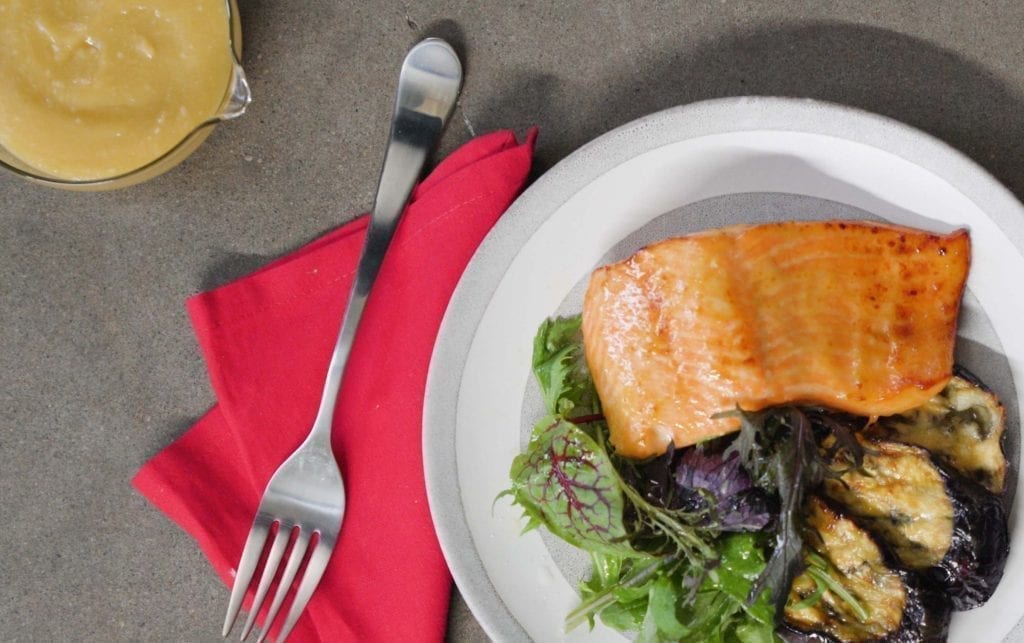
Mix, store, set. Learn this simple, miso-based marinade to enhance any dish.
The post Easiest Healthy Marinade for Anything appeared first on Under Armour.
3 Easy 3-Ingredient Dressings
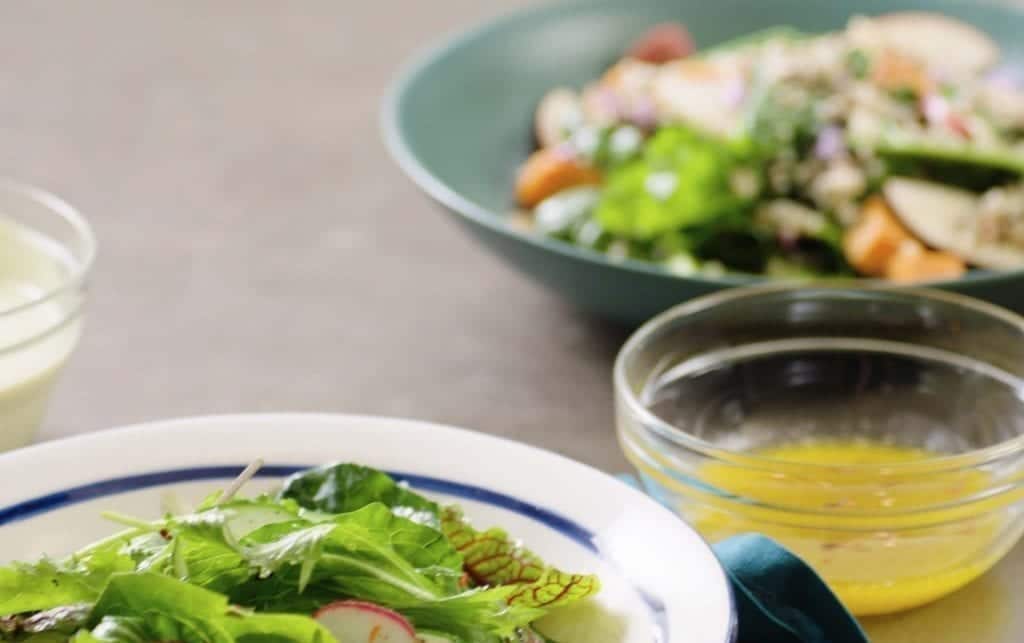
Cashew cream, tahini vinaigrette and chili oil are 3 easy 3-ingredient dressings that can be used in a wide range of dishes.
The post 3 Easy 3-Ingredient Dressings appeared first on Under Armour.
Subscribe to:
Comments (Atom)